
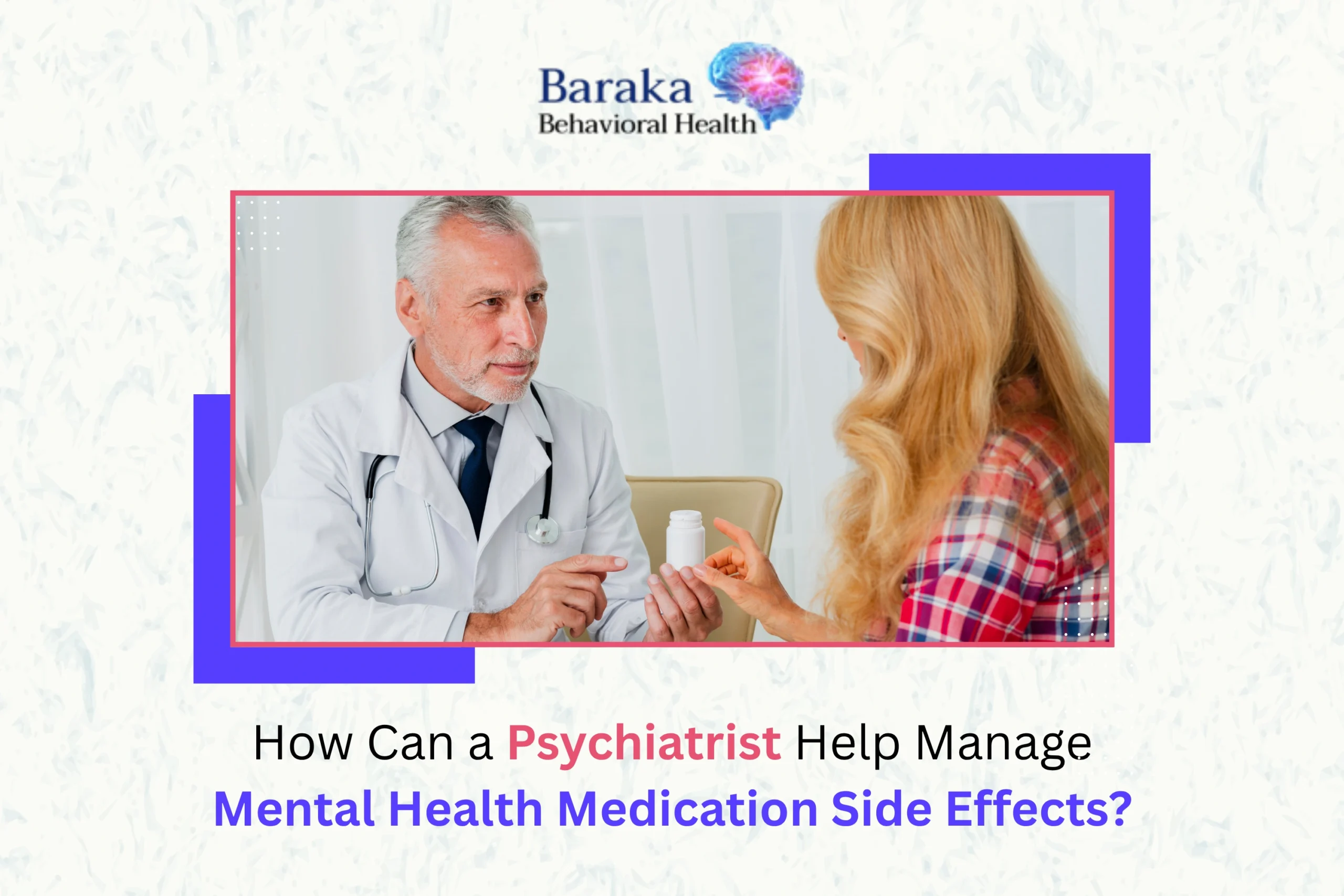
Taking medicine for your mental health is a huge step and it really is. You want to feel better, but occasionally these pills create new issues. We call these side effects, which can cause fatigue, dizziness, or nausea, and they can be incredibly frustrating. You may even consider tossing your pill bottle away. Please refrain from doing that.
A psychiatrist is a medical doctor trained to fix these exact issues. They understand the brain and know how to tweak your care plan so you get the good benefits without the bad feelings. Getting help is easier than you think, and Baraka Behavioral Health can help you find the right balance for a happy, healthy life.
Common Side Effects of Mental Health Medicines
When you kick off a new brain medication, it’s normal for your body to take a bit to adjust. Your system has to get used to the new chemicals and during this time, you might see some odd changes. The Centers for Disease Control and Prevention (CDC) notes that every single body reacts differently to medicine. A medication that induces drowsiness in your best friend may provide you with a surge of energy due to the uniqueness of your body.
Some very common side effects include:
- Feeling very sleepy during the day
- Trouble falling asleep at night
- Gaining or losing weight unexpectedly
- Having a dry mouth that makes it hard to swallow
- Feeling dizzy when you stand up fast
- An upset stomach or feeling sick after you eat
In many cases, these irritating issues subside after some weeks as your system gets used to them. The medicine starts doing its real job, but if these feelings persist for a month, you should speak up. You never have to just suffer through bad side effects in silence.
Why You Should Never Stop Your Medicine Suddenly
When a pill makes you feel sick, quitting may sound like a great idea, but it is not. Stopping your medicine all at once is actually very dangerous because your brain relies on that daily dose. It expects the medicine every single morning. If you take it away too fast, your brain gets a nasty shock.
This shock can make you feel incredibly sick. You might get dizzy and suffer from bad headaches. Sometimes, you may feel even more anxious than you did before starting the medication. This phenomenon is referred to as a rebound effect.
Always check in with your psychiatrist first; they’re the ones who can help you lower your dose safely and gradually. This way, you keep your brain protected and steer clear of any nasty crashes while you look for a better solution.
How a Psychiatrist Fixes Medication Problems
Psychiatrists spend many years in school studying how these treatments work. They are true experts who create a clear plan when you tell them about your side effects. Here are the exact steps they take to help you feel normal again:
- Listening to Your Story Your doctor will sit and listen. They want to know exactly how you feel when the bad feelings hit and how long those feelings stay. This helps them find the root cause of the problem.
- Changing the Dose Sometimes the medicine is correct, but the amount is wrong. Taking too much causes issues. Your doctor might simply lower your daily dose (which is a very common fix for upset stomachs). A smaller amount can still heal your mind without making your body sick.
- Changing the Time of Day Timing is everything. If your pill makes you sleepy, your doctor will tell you to take it at night. If it keeps you wide awake, taking it with breakfast and making a simple time shift works wonders for your daily energy.
- Switching to a New Medicine If a pill just doesn’t work for your body, your doctor will pick a new one. There are many great options available today. They will keep trying until they find the absolute right fit for your unique brain.
Expert Care at Baraka Behavioral Health
At Baraka Behavioral Health, we offer thoughtful, unhurried care without rushing you out the door, providing real, honest support to children, teens and adults who need it.
We help people dealing with:
- Depression and deep sadness
- Extreme worry and high anxiety
- Mood changes and emotional instability
- Trouble paying attention and ADHD
- Bad reactions to current medicines
We’re excited to take care of patients in Texas, Minnesota and Iowa. You can come to our comfy clinic in Spring, Texas, or reach us online with a straightforward telehealth video call. You will always see the exact same expert doctor at every visit, which is very important because you never have to repeat your painful story to a stranger. We keep your care plan safe, clear and focused on you.
When to Call Your Doctor Right Away
Some side effects are tiny and annoying. Others are giant warning signs. You must call your doctor or visit a hospital instantly if you see these danger signs:
- A bad skin rash or itchy hives
- Swelling in your face, lips, or throat
- Trouble breathing or a tight chest
- A heartbeat that feels way too fast
- Sudden thoughts about hurting yourself
Your safety always comes first. If a medicine makes you feel scared, reach out for help right that second. Do not wait to see if it gets better on its own.
Start Your Journey to Better Mental Health
Finding the perfect balance for your brain takes teamwork and it really does. You deserve to feel happy, calm and safe every single day without having to accept feeling sick just to treat your mind. The right psychiatric care changes everything for the better.
If you are struggling with a confusing medicine plan, Baraka Behavioral Health is here to guide you. We focus on long-term health and skip the quick fixes, so call us today to book your very first assessment visit. Let us help you find the lasting peace and comfort you truly deserve.
FAQs
Q. What are common side effects of brain medicine?
Some medicines used to treat brain or mental health conditions may cause side effects such as sleepiness, dizziness, nausea, dry mouth, or difficulty sleeping. Side effects can vary depending on the medication and the person taking it.
Q. Is it safe to stop taking the pills all at once?
No. Stopping taking pills can give the brain a big shock. You might get dizzy, have headaches, or feel very scared.