
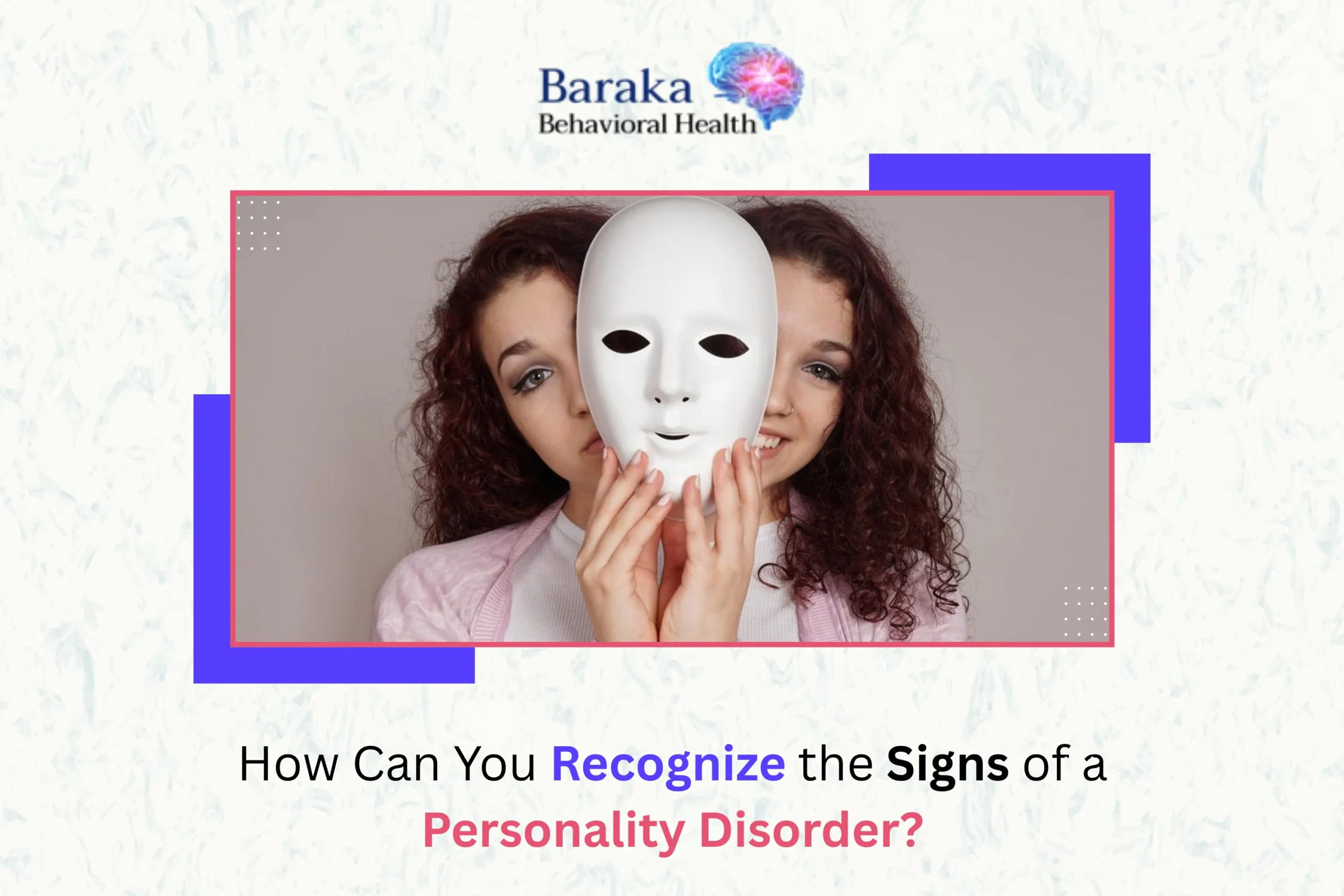
Do you know someone who acts very differently from others? Maybe they get mad very fast. Or they change their mood for no reason. These could be signs of a personality disorder.
Below, we will help you understand what a personality disorder is, what signs to look for and how to recognize it.
What Is a Personality Disorder?
Personality shapes your thoughts, feelings and actions, making you unique and aiding in relationships. Most people have personalities that work well for them.
But some people have thoughts and feelings that cause problems. They act in ways that hurt their relationships. They struggle at school or work and feel upset a lot. These patterns start when they are young and do not go away on their own.
When these patterns are very strong and cause big problems, it is called a personality disorder. This is not the person’s fault. It is a mental health condition that can be treated.
At Baraka Behavioral Health, we offer caring and personalized support. We help you understand your emotions and relationships. In a safe and respectful space, our qualified staff provides evidence-based treatment.
Common Signs of a Personality Disorder
Personality disorders vary but often share similar signs. Key symptoms include:
Challenges in Healthy Relationships
Many with personality disorders find it hard to form stable relationships.
Making and keeping friends is very hard for these people. They might have many short friendships that end badly.
- They might love someone one day and hate them the next
- They often do not trust others and may push people away
- They might cling too tightly and become too needy
Strong Emotional Reactions
People with personality disorders often have very strong emotions. They feel:
- Angry
- Sad
- Worried
These feelings can arise at any time and from nowhere. They may last for many days.
Minor problems can feel like major disasters. Some may shout or cry over minor issues and find it hard to calm down. Others often feel empty and unsure of their emotions.
Unstable Sense of Self
Some people with personality disorders do not have a clear sense of self.
They may:
- Change their goals often
- Change their beliefs or values
- Copy other people because they are unsure of who they are
- Feel worthless or unloved
Trouble Controlling Behavior
Impulsive behavior is another common sign. A person may act without thinking about the consequences.
Examples include:
- Risky spending
- Unsafe driving
- Substance misuse
- Sudden relationship decisions
- Emotional outbursts
These behaviors impact personal and professional lives.
Difficulty Trusting Others
Some personality disorders may cause people to worry that others want to hurt them.
They may believe others are:
- Lying to them
- Judging them
- Trying to harm them
Even when there is little proof, these fears can make relationships difficult.
Need for Constant Approval
Some people may need a lot of praise or attention.
They may:
- Want always to be noticed
- Feel upset when they are ignored
- Have a hard time accepting criticism
This can affect friendships, family life and work.
Avoiding Social Situations
Fear of rejection or embarrassment can lead individuals to avoid social situations. They might:
- Decline invitations
- Shy away from meeting new people
- Choose isolation instead
Being alone too much can lead to sadness and loneliness.
Different Types of Personality Disorders
Mental health professionals categorize personality disorders into three clusters based on common traits.
Cluster A
These disorders cause unusual thoughts and social behaviors. People may appear distant, suspicious, or withdrawn.
Examples include:
- Paranoid Personality Disorder
- Schizoid Personality Disorder
- Schizotypal Personality Disorder
Cluster B
These disorders cause emotional ups and downs and dramatic behavior. They lead to strong feelings, problems in relationships and impulsive actions.
Examples include:
- Borderline Personality Disorder
- Narcissistic Personality Disorder
- Antisocial Personality Disorder
- Histrionic Personality Disorder
Cluster C
These disorders cause anxiety and fear. As a result, people often struggle with worry and need support.
Examples include:
- Avoidant Personality Disorder
- Dependent Personality Disorder
- Obsessive-Compulsive Personality Disorder
How Personality Disorders Are Diagnosed
A proper diagnosis requires a comprehensive mental health evaluation.
At Baraka Behavioral Health, we perform in-depth psychological evaluations. These identify emotional and behavioral trends. We carefully consider each individual’s background, present issues and treatment objectives.
The evaluation may include:
- Clinical interviews
- Psychological testing
- Review of symptoms
- Medical and family history
- Behavioral observations
An accurate diagnosis helps create the most effective treatment plan.
Treatment Options for Personality Disorders
Treatment varies due to the uniqueness of each individual.
Baraka Behavioral Health offers successful treatments and caring services looking to lasting improvement.
Individual therapy helps clients to explore thoughts and feelings, find alternative ways of reacting, identify improvements in relationships, and address stress management issues.Dialectical Behavior Therapy (DBT) is most valuable for emotional regulation and skills in these areas are emphasized:
- Emotional regulation
- Mindfulness
- Distress tolerance
- Healthy communication
These abilities can be beneficial daily and in relationships.
While medication does not cure personality disorders, it can help alleviate symptoms such as anxiety and mood swings. Our providers keep track of and modify medications to support the progress of our clients.
We work hard to help our clients develop confidence, self-awareness and long-term progress.
Take the First Step
Do you see these signs of a personality disorder in yourself or someone you love? Do not wait. Getting help early is best.
Many people with personality disorders have made great progress. They learned to manage their symptoms and found happiness. You can too.
At Baraka Behavioral Health, we are ready to help. Call us today to book a visit. We have in-person and online appointments. We will listen to your situation; there is no pressure.
You deserve to feel better, have good relationships and find joy. Let us help you get there.
FAQs
What causes a personality disorder?
Many things can cause it. The way your brain works can make it more likely. Things that happen in your life can also play a part. Some people are born more sensitive than others.
Is a personality disorder the same as being crazy?
No, not at all. It’s a health condition, like diabetes or high blood pressure. It’s not the person’s fault and with assistance, they can feel much better.